We impact our children’s futures more than we know when we refuse to allow comfort to become their god and instead point them to the God who will be their strength and comfort as they do the next right thing, no matter how they feel about it. This sets them up for a lifetime of saying ‘yes’ to God, even if it comes at the expense of saying ‘no’ to personal comfort.

At the close of our ladies’ Bible Study the question was asked, “As mothers and homemakers, how can we practically live out the concept of ‘living in the light of eternity?’”
There were various point of discussion raised, all of them good, beginning with an attempt at defining the term.
Is living with eternity in mind a spiritual exercise of reminding both ourselves and our children that this world is not our forever home?
Is it found in cultivating habits that reflect the glory of God in all the little duties of motherhood, homemaking and hospitality?
Is it reaching out to friends and strangers in need of Jesus, love and companionship?
Is it the intentional shaping of our children’s characters in ways that we know will benefit them in the future?
I believe each one of these plays into living with eternity in mind. Our unapologetic goal is be like Jesus and to tell the world about Him, yet we all know this doesn’t happen without intentionally fighting for more.
We do not become less selfish without purposefully choosing to give where it hurts.
We do not naturally speak gently and graciously without being intentional in our speech.
We cannot hope to emulate Christ without spending time in His presence.
We must open our mouth if we hope to tell others about Him.
As mothers, one of the ways we live with eternity in mind is by teaching our children in the spirit of Deuteronomy 6:6-7. “You shall love the Lord your God with all your heart, with all your soul, and with all your might. And these words that I command you today shall be on your heart. You shall teach them diligently to your children, and shall talk of them when you sit in your house, and when you walk by the way, and when you lie down, and when you rise.”
Based on this concept, I compiled a list of fourteen areas of training that can help our children form habits which mold their thinking into God-conscious patterns. We do not want to raise self-righteous little humans who say the right thing while the right thing is far from their hearts, but we are commanded in the Scriptures to teach and train our children in the paths of righteousness. This is not some fool-proof, “do this and your children will be perfect” methodology, but rather an honest look at patterns and habits that make surrender to Jesus easier as they grow and mature.

1. Teach them to be conscious of God, not of people’s opinions.
Something I have been very intentional about is to never allow the phrase, “What would ____ think if they saw you/heard you/found out?” in our home. We already know that comparing ourselves to other people is not wise. (2 Corinthians 10:12) Why allow thought patterns that encourage people-consciousness rather than God-consciousness. What if instead we say, “Well, what does Jesus say about that?” and from this platform, take them to the Scriptures?
We also know that we are children of light, not darkness and every hidden thing will be brought to light. (1 Thessalonians 5:5, Ephesians 5:8) This is one I feel very strongly about. Our children should never feel pressured into hiding anything for us. Keeping cozy family secrets, being honourable in keeping peoples’ confidences, private? Yes, of course, but hiding things from other people for the sake of protecting their parents’ wretched reputations? Never!
It’s great accountability, really. If you find yourself cringing at the things your children are telling their friends, ask yourself why. Is it because you are afraid of what they will think of you for allowing ____, or is it because the Lord is convicting you of something you need to clean up in your life, or get rid of?
For instance, a number of years ago I overheard my daughter telling her friend about a movie we had allowed the children to watch. I cringed. And that caught me up short. I asked the Lord if He had anything to tell me and He affirmed what I already knew. That particular movie was a waste of time. It was neither edifying nor educational and the reason I was embarrassed was because I knew deep down that it was not a good use of my children’s brain space.
So I apologized to my children and told them that we were going to tighten up the holes in our mental sieve that filtered the worthy from the unworthy. It started a great conversation about the things that edify versus mindless entertainment.
If our goal is to raise children who are conscious of eternity we will teach them to be conscious of what Jesus thinks of their choices and habits, not what their peers or the pastor may think. And this, my friends, begins with us.

2. Teach them to be lovers of others more than lovers of themselves.
In a world where self-care is king and self-love is applauded, it is easy to forget that, like Jesus, we are here to serve others, not build comfortable little kingdoms for ourselves. (Mark 10:45)
Human nature when left to itself is inherently selfish.Training our children to be otherwise takes intentional effort. It will not, and I repeat, will not happen by accident.
Children learn to serve others by;
- being selflessly and graciously served by their parents,
- observing Mom & Dad giving cheerfully to others’ needs
- being given opportunities to serve, first in their own home and then beyond (in exactly that order!)
I believe all three of these are necessary components. Doing only the first 2 will produce entitled children who either ignore or miss seeing the needs around them. Practicing only the last 2 can foster resentment in children because they will come away believing two things. Number one, “everyone else is more important to my parents than I am” and two, “They only want me for what i can give them.”
Teach them the blessing of giving, even when it is inconvenient, messy, or unpleasant. (Acts 20:35) This means we are serving both our children and others when it is inconvenient, messy and unpleasant, because God forbid that we ever require anything from our children that we are not first willing to exemplify in action.
1 Peter 4:11, As each has received a gift, use it to serve one another, as good stewards of God’s varied grace:—— whoever serves as one who serves by the strength that God supplies – in order that in everything God may be glorified through Jesus Christ.
Our service to others must be done as unto the Lord and not for the praise of people. If we serve to earn love or approval from people we will feel like victims if it goes unnoticed or unappreciated. If we serve for love of our wonderful God, we are free to experience the joy of holy service.
If we only praise our children when they work hard or serve us in some way, we set them up to subconsciously believe that performance reaps love.. This is not to say we shouldn’t express thankfulness and dish out praise when they serve us or please us in some way, but just as importantly, they need to know that they are unconditionally loved. All the time. Even when emotions got the best of them; even when they performed poorly and were given consequences for their irresponsibility. The times they fail are the times they most need to hear, “Yes, I am disappointed by your poor conduct, but that doesn’t change the fact that I will always love you. I’m confident you will do better next time.” These are the times they need to hear us praying grace over them, asking God to help them do the right thing while also thanking God for the gift they are to us.
May we teach them to serve out of a pure heart of love. For God first and people second. Not to earn love, but to please God and bless people.

3. Teach them to be self-governed.
I distinctly remember the day my dad handed my sisters and I our own alarm clocks and told us we were old enough to be responsible for getting up on our own. I don’t remember exactly how old I was, maybe ten? But I do know that before this event, we were taught to jump out of bed the minute we heard Dad’s voice calling up the stairs. We had ten minutes to get dressed, do our hair, clean our bedrooms, and report downstairs.
This may sound extreme to some of y’all, but I do know that habits of discipline like this, formed the foundations of my life and I am deeply grateful to my parents for choosing long-term goals for us rather than doing whatever was temporarily easy.
By the time I gave my life to Jesus, getting up the instant my alarm rang was habitual routine. Setting it half an hour earlier so I could spend time with Jesus wasn’t difficult. It felt natural.
We give our children a tremendous advantage in life if we teach them to be self-governed. By that I mean, they will do the right thing even when no one is looking, nagging, or checking up on them. This takes diligence and discipline on our part. In the busyness of the moment, it may be easier to keep reminding our children to practice their instruments rather than make a chart that allows then to take responsibility. It may be easier to clean up after them than to call them in from their play to pick up the jacket that didn’t make it into the closet. It may be easier to look the other way than to correct bad table manners or walk them through why certain idiosyncrasies (like talking too much) are annoying to some people.
But ask yourself, “If I let this slide, will it serve him/her well, in the future?” If the answer is ‘no’ then, my friends, do the right thing. It is unkind to allow our children to grow up selfish, undisciplined and self-centred because they are the ones who will end up suffering for it.
4. Teach them to follow directions.
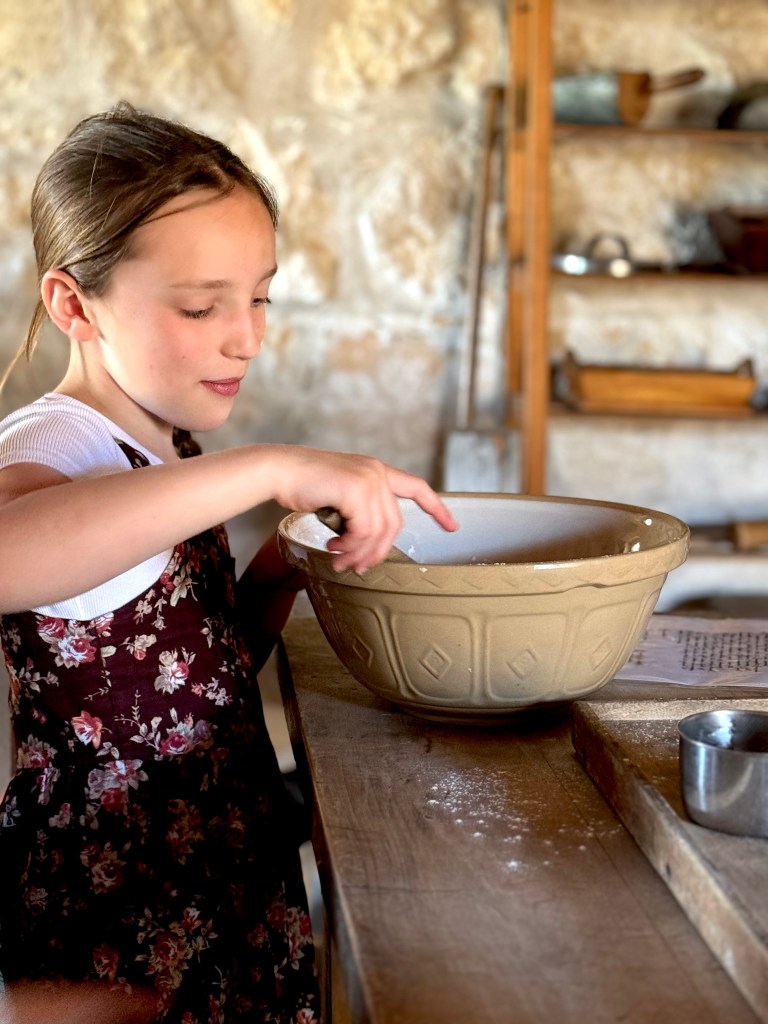
Not because you feel a need to micromanage their lives but because attention to detail, team work, and being able to follow directions will serve them well as they grow up and participate in church life, relationships, and their respective work places . Ecclesiastes 9:10 says,“Whatever your hand finds to do, do it with all your might. “ Doing our best in everything we do is pleasing to God. Half-hearted, haphazard work ethic breeds entitlement and entitled people make terrible employees and even worse employers.
We live in a world that celebrates individuality as the end all. To be oneself, to make one’s voice heard, to shout one’s opinion; these are lauded as “making a difference” and “demanding the respect I deserve.” As a society, we have been hoodwinked into believing that if I submit to someone else’s opinion, I am devaluing my own worth.
My friends, nothing could be further from the truth. Ephesians 5:15-21 instructs us to be filled with the Spirit, submitting to one another out of reverence for Christ. So what if, instead of fighting for our rights, we taught our children the grace of giving and taking, honourably?
1 Peter 2:13-14 says, “Be subject to every human institution, whether it be to the emperor as supreme, or to the governors as sent by Him to punish those who do evil and to praise those who do good. For this is the will of God…” so what if, instead of venting about that last traffic ticket, we take responsibility for our misdemeanour? Our children should hear repentance, not an irate parent ranting at the injustice of something they deserve.
1 Peter 2:18 says, “Servants, (employees) be subject to your masters with all respect, not only to the good and gentle but also to the unjust.” So what if, instead of complaints about that unreasonable employer our children hear only respectful speech coming from our lips?
Following instructions does not devalue our children’s worth. It prepares them to be useful, responsible, respectful adults who honour God by following His instructions with unquestioning obedience.
It also helps them avoid embarrassment when they first enter the world of employee and find they are presented with two choices, do exactly as the boss delineated or get fired.
…for we aim at what is honourable not only in the Lord’s sight but also in the sight of man. 2 Cor. 8:21
Again, it begins with us. We can only enforce that which we are willing to live.

5. Teach them the value of kindness.
“The Lord’s servant must not be quarrelsome, but kind to everyone…” 2 Timothy 2:24. We have a saying at our house that goes something like this, “You are only as kind as you are kind to your siblings” for after all, they are included in the “everyone.”
To put that into practical terms, there are three specific things we do not tolerate,
- Unkind, or loud tones of voice– Most of what we say isn’t wrong in itself. It is our tone of voice that makes it hurtful, mean, or unkind. *Raised voices, for any reason, destroy peace. Even happy yelling indoors is unnecessary and disruptive. In my opinion, there is never an occasion that necessitates bellowing up the stairs or down the hall (unless the house is one fire) when one has legs to run up or down those stairs. Something my parents were adamant about was, if someone can’t hear you calling them in a normal tone of voice, you go look for them instead of raising your voice several decibels.
*When I first posted this on Instagram stories, someone messaged me with a polite critique that made me realize I hadn’t been entirely clear about my definition of “quiet.” She was one who had grown up in a quiet, but stilted atmosphere with undercurrents of stress, and found it disconcerting that I was advocating teaching our children to not raise their voices. She enjoyed and appreciated the fact that her children felt the liberty to run, play, screech and holler outside and share their opinions and thoughts.
I’m with her. Out of doors, children should be allowed to shriek, yell, run and play to their heart’s content so long as the sounds are happy ones.
Also, it is important to note that I am advocating for quiet tones indoors, not silence. We want our children to freely express their feelings, desires and opinions, but without being pushy and rude in their address and tone of voice.
- Name calling, both that directed at other people or oneself– Saying, “I did something stupid” is very different from saying, “I’m stupid.” One admits to having made a mistake, the other is a harsh judgement of character. To allow accusations like a “you’re cheating” or “you liar” to fly from our children’s mouths does one of two things. A. It hurts and angers the accused while elevating the self-righteous accuser, or B. If said in jest, it makes sin a little less sinful. The Bible says all cheaters and liars are damned unless they repent. Why would we joke about something so dire?
- Unkind teasing– Gentle teasing when everyone understands it’s a joke is acceptable, but as my dad used to say, “It’s only funny if both parties think it’s funny.” Mocking or teasing at someone else’s expense is not okay. Throwing unkind barbs someone’s way does not encourage peaceful relationships or healthy communication.
Now before you think our home is perfect; it is not. Our children are a work in progress, and unfortunately, so are their parents. We all know that parenting isn’t as simple as laying down rules. Incidentally, that’s the easy part.
Being consistent in enforcing the rules we’ve made is the real marathon. However, if we are consistent, even if it means giving consequences for misdemeanours, eventually the hard work begins to pay off and the normal atmosphere of our homes will be one of peace and kindness instead of chaos and competition.
Another way to promote kindness among siblings is by following the outline in Romans 12:10, “Love one another with brotherly affection. Outdo one another in showing honour.” We can encourage this behaviour by treating our children with honour as well as giving them pointers on how to honour their siblings and peers. Something we have done in the past when two of our children seemed to constantly be at odds with each other, is have them do random, kind things for each other. At first I had to give them ideas, but it quickly took root and totally changed the dynamics in their relationship. It didn’t take long for them to get back to feeling like comrades and not competitors.
6. Teach them to appreciate each other’s differences.
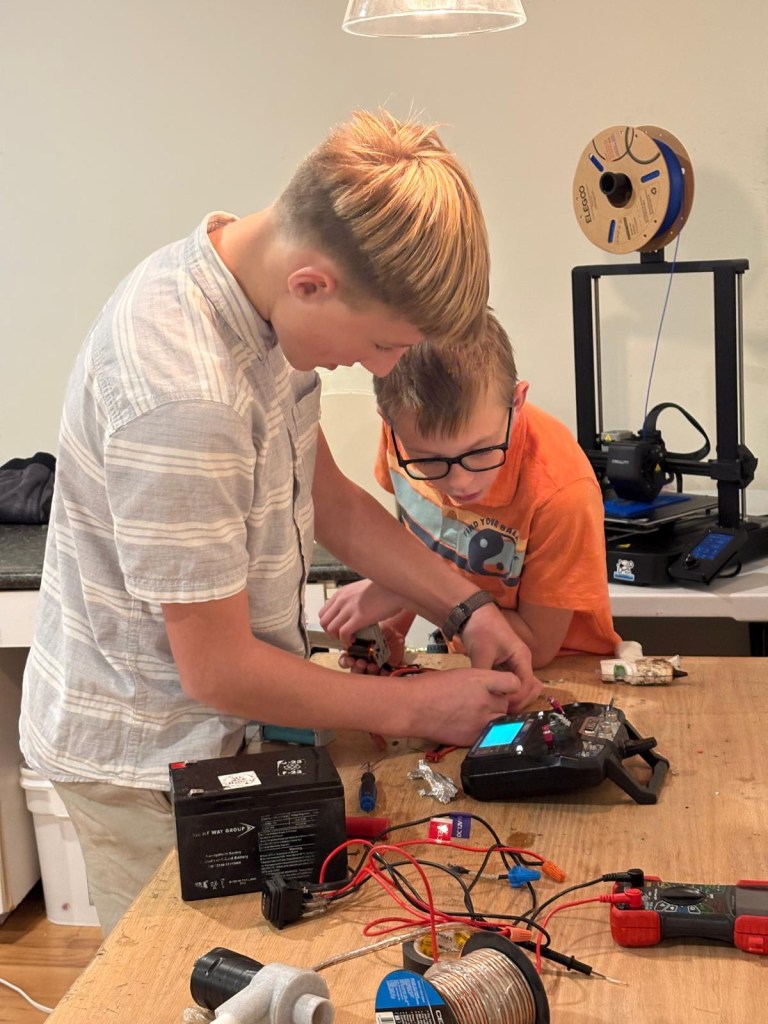
Our children should see each other as comrades not competitors.
Not one of us are the best at everything. Most of us truly excel in only one or two things and are mediocre in most things.
This is not to say we should not strive for excellence. 1 Corinthians 14:12 instructs us to, “strive to excel in building up the church.” In the parable of the talents, the one who hid his talents instead of using them for the benefit of his Master, had his few talents taken away. (Matthew 25:14-30) Striving for excellence and using the gifts we are given, is then, both necessary and good.
Competition is not.
As Christians, we are part of a whole, not whole individuals. None of us are the complete Body of Christ on our own. (1 Corinthians 12:12-30) We are all gifted differently, yet combined as one, create a beautiful visual of the Church. We were never meant to compete with each other, comparing what I do or accomplish with what my brother or sister is doing. The Bible has the right of it when it says, “when they compare themselves with one another, they are without understanding.” (2 Corinthians 10:12)
Comparing, competing, trying to ‘be the best,’ all of these only serve to do either one of two things;
- breed insecurity based on our perceived “lack,” or,
- breed pride based on our perceived superiority.
The same is true for our children. We give them an enormous advantage in life when we are proactive in teaching them to appreciate each other’s strengths and forgive each other’s weaknesses.
This begins with us. As parents, our speech must be filled with grace and appreciation for the ways other Christians, both locally and further afield, are being used for the Lord. There dare not be so much as a hint of contempt in our voice when we speak of others.
“If we live by the Spirit, let us also keep in step with the Spirit. Let us not become conceited, provoking one another, envying one another.” Galatians 5:25-26
The majority of discord is born of envy or pride which leads to provoking each other, and I don’t mean the good kind of provoking Scripture speaks of in Hebrews 10:24. This is especially true in sibling relationships.
In our home we have one child who is excellent with words, mimicry and writing.
We have another who is good at math and has a fascinating memory for all things science.
We have a third who excels in math and music.
The temptation then is to gloat about the things they are naturally good at in comparison to another sibling’s lack. I believe a wise parent will verbally acknowledge each child’s strengths and encourage their siblings to do the same. I don’t gloss over individual giftings and pretend they’re all the same. Children are too intelligent to buy that. However, it is important that they appreciate the fact that each of them excel in something but need work in other areas. With time, they begin to see these differences, not at something to huff about or compete against, but as something to appreciate for the value it brings into their own lives. They become a team instead of each other’s competition.

7. Teach them diligence over despair when they hit road blocks.
I was born with an insatiable urge to overcome. Mountains were meant to climb, difficulties were an invitation to try harder, and the mere insinuation that I couldn’t do something fuelled my determination to conquer.
Not so, my offspring.
When they were younger, they were more inclined to stand at the foot of the mountain and declare it too difficult to bother trying. The insinuation that something might be too hard didn’t motivate them at all. It was more like a seal upon their little minds. Minds that responded with, “Thank you for telling me I can’t before I weary myself by wasting time and effort.”
I didn’t understand their reticence, yet it being the extreme opposite of my natural response, found it mostly amusing. That is, until we began homeschooling. The first few years were easy. None of them found learning new concepts in the early grades very difficult.
However, at some point, every single one of them hit a road block, they would happily have parked on.
Forever.
“Too hard, “ “I can’t do it,” “I can’t talk to strangers,” “I can’t….”
Mr. I Can’t seemed to have permanently taken up residence in our small house and was taking up valuable space with his unwanted perspective.
There is no one perfect, fool-proof method to boot Mr. I Can’t from the premises of our homes but I found that forbidding his name from being spoken made his sneaky little lies less believable.
Teaching diligence in other areas helped, as well as lots of encouragement that, “yes you can!” But the one thing that made Mr. I Can’t feel so unwelcome in our home that he removed himself from our premises was a little bit of old-fashioned “tough love.”
For Dustin, this began as early as five years old when I said, “Oh yes, you will learn to ride a bike,” and “Oh yes, you can earn to empty the dishwasher and do it well.”
Over the years, each of my children have been asked to perform in public at some event or the other. Two of them especially found this very difficult. Whether it was playing violin before an audience, singing solos when called upon, or giving speeches and performing in skits with our local homeschool group, the first time or two was precluded by many tears and reiterations of, “yes, you will do as you were asked, and no, you may not back out, and yes, you might be feeling sick, but those are nerves speaking, not reality.”
Insisting they talk to visitors at church, making them pay for their own purchases at stores, having them own their wrong doing and apologize for it, to stranger and friend alike, playing in a cello concert with 40 other cellists- all of this is terrifying at first, but as they succeed they grow in confidence and as their confidence grows, fear recedes until it no longer controls them.
Some of these things might still be on the list of “least favourite ways to occupy my time,” but no longer are there tears and heart palpations. These days, it is mostly taken in stride. Occasionally I see Mr. I Can’t peeping through the basement window into our schoolroom, but rarely does he feel welcome enough to make his way into our house.
I have been fascinated watching my oldest daughter this school term. As a little girl, she was the child Mr. I Can’t had the most influence over and yet here she is, in her second year of high school making formidable lists of academic and personal goals which she tackles with enthusiasm.
I realize that in writing this, I am primarily addressing one personality type, but there will be times in life when even the most indomitable of us hits our own personal Waterloo. Times when all we can we say is, “This situation looks 100% impossible, but by the grace of God I will keep putting one foot in front of the other and trust Him to bring me out on the other side of this difficulty.”
All of us need a little bit of grit and a whole lot of grace to do life well, and our children are no exception. They will be so much more productive and confident if they learn to exert themselves beyond their comfort level and taste the success of overcoming their worst fears.

8. Teach them good etiquette.
Prior to the Hippie Movement in the 1960’s, etiquette was taught as a curricular course in most of the developed world. However as the wave of anti-authority rhetoric grew and spread like cancer across the nation so did the sentiment that etiquette was stuffy, restricting and archaic.
This opinion was fuelled by the growing feminist movement, whose slogan screamed for equality with men. As women climbed the societal ladder and pushed their way into workplaces and onto public platforms they seemed to believe that in order to prove their competency, they had to scorn all things feminine. This led to an over all reticence in men, in regard to treating women with chivalrous consideration for fear of being labelled “bigoted” or “chauvinistic.” (And now, before you have my head, let me insert that I don’t believe there is anything wrong with women working. There are many situations where this is necessary. However, our worth as women is proven not by our becoming more masculine in an effort to demonstrate our competency, but in retaining our femininity as we competently handle the job.)
I remember my dad telling us about one such woman whom he encountered while working with a construction crew in his teen years. They were doing a large roofing job and needed a few extra hands so the foreman hired a few extra people, one of whom turned out to be a woman. My dad was taken aback- roofing crews are predominately made up of men, and a little annoyed- he fully expected her to be gruff, tough and pushy, as previous experience had led him to believe all women in construction behaved. Imagine his surprise as he watched her pull in in the next morning, dressed in appropriate work attire and greeting everyone with dignity and respect. She proceeded to quietly and competently do her job without fanfare or an attempt to be “one of the boys.” She didn’t feel the need to swear or push her weight around. She was fully confident in her worth as a woman and employee. By doing her job well, while retaining her femininity, she won every single man’s respect that week.
Okay, so with that bit of history behind us, let’s get back to etiquette.
I believe showing proper etiquette not only confers respect to those we interact with but also invites thoughtfulness toward others.
Following are some of the basic rules of etiquette we are working to instil and follow as a family.
- Speak when spoken to. (Especially when meeting strangers or being greeted by adults)
- No interrupting (This includes starting side conversations in small spaces such as living rooms and around the table. Turning to the person next to you and starting a different conversation than the one in progress, not only signals disinterest but also fosters chaos.
- Basic table manners (Passing food counterclockwise instead of everyone reaching in to serve themselves; One conversation at a time; Food was meant to be savoured, not shovelled; Asking to be excused from the table; Proper use of fork and knife… also, use napkins, please just use napkins! )
- Proper telephone etiquette. (Yes, it is always polite, especially for children and teens who don’t have their own phone to use the old-fashioned, “Hi, this is _____” and yes, it is always rude to hang up without saying goodbye)
- Look people in the eye when they are speaking to you. (This is a hard one for children who are shy, but it is still something to work toward and eventually, hopefully, master)
- For men and boys— offer your chair/seat when a lady walks into a full room. For men, boys, women and girls- offer your chair/seat when a an older person walks into a full room. Girls should not offer their seat to young or capable, middle aged men.
- Write thank you notes. At the very least send a thank you, via text. (and that just reminded me of a few I haven’t written!)
- Teach your sons the proper way to hold doors open, and to consistently do so for ladies and older people. (and here, may I insert, please, for the love of all that’s good, teach your girls to not simper and surmise when a young man holds the door for her. A straightforward smile and simple thank you will do nicely. Anything more turns what should be natural into an uncomfortable situation that makes it awkward for boys to repeat the action)
- Teach your boys to offer to carry heavy things for ladies, or even small things if their own hands are empty. Teach your girls how to graciously accept without thinking Mr. So and So is making advances. The thing is, the more we normalize good etiquette the less the temptation to read into the courteous actions of young men and girls.
- Teach your sons and daughters to stand up for introductions, to greet guests at the door and to see them off with a smile. (Young people in particular, if they are at home, should be present to greet guests, even if the guests are not their own age)
- Never, never point at people. It’s rude. It’s embarrassing. It’s disconcerting.
- Dress appropriately for every occasion. It is only respectful to dress up for church and formal functions. This is not about fashion; it is a way to demonstrate that we are taking the event or setting seriously and are prepared to engage respectfully.
Obviously this is not the “end-all” list. And lest you think we have already attained, these are twelves goals we intentionally target, not, as yet, our finalized accomplishments. So let’s go work on raising some stellar young men and women by putting in the hard work, today. Like a friend told me recently, “We are working on raising Little Men, not Old Boys.”

9. Teach them to love good music.
Music is often seen as an amoral issue, but science and history would tell us otherwise. One need not be particularly brilliant before deducing that we are indeed moved by music.
This is a beautiful thing, a symphony of chords harmonizing with our soul’s thirst for beauty and worship, but like all the beautiful things God created, the devil quickly showed up with a counterfeit.
There are the clearly evil forms of music. The off-beat pounding of Godless, profanity pouring from the throats of rasping, screaming, heavy metal rockers; the sensual country songs that no longer tell innocent stories, but rather glorify the very sins that Jesus died to redeem us from; these are obvious to any Christian. But what about all the songs sung by professing Christians who freely admit that their music inspiration comes from Rockers who profane Jesus at every turn? What about the thousands of empty, cheap, tasteless songs that have more to say about our feelings that they do about the One we think we’re worshipping?
The easiest way for our children to recognize and crave good music is to constantly expose them to the beautiful harmonies of classical and choral music. These music styles invite peace and harmony into our homes. They calm rambunctious little hearts and fire neurons in their developing brains.
Studies have shown that classical music can improve memory and reduce stress, boost overall mental wellbeing, and even improve children’s performance in school. Classical music invites relaxation. From the moment you hit the play button, your heart-rate begins to slow and your blood pressure lowers significantly.
Various studies have shown that music reduces cortisol levels associated with stress. Professor Daniel Levitin says, “We’ve found compelling evidence that musical interventions can play a health care role in settings ranging from operating rooms to family clinics. But even more importantly, we were able to document the neurochemical mechanisms by which music has an effect in four domains: management of mood, stress, immunity and as an aid to social bonding.”
There is also a clear, scientific explanation for the way music lowers blood pressure. The vagus nerve, which is the main nerve of your parasympathetic nervous system controlling specific body functions such as digestion, heart rate and immune system, is located near the eardrum, and responds to musical vibrations by triggering the body to relax.
I have never been to a pop, rock, country, or even so-called Christian concert, but I have seen enough video clips of screaming crowds, pulsating, blinding lights and off-beat music to know that *most modern music is the exact opposite of peace. Uncontrolled frenzy, loss of dignity, and hoarse screaming seem to be its trademarks and not the peaceful presence of our order-loving God.
Good music brings us into the presence of Jesus. It invites peace, harmony and reflection. It is structured to flow with the natural rhythms God already created. The pulse of nature, the beating of our hearts, the rhythm of waves rolling and receding. It can be energetic or soothing, but it is in sync with God’s created rhythms.
Singing together draws us together. When we sing together, something awe-inspiring happens in the spiritual that frankly, I don’t understand in full. I do know we are commanded to sing. (Colossians 3:16) blending our voices in praise to our Father God, blends hearts and harmonies in a mysterious way.
Bad music leaves us feeling dissatisfied. We keep flipping to a different song, not realizing our souls are looking for depth and peace. Bad music drives us forward at a maddening pace, leaving no space for reflection. The harmonies are sporadic, the beat counter-intuitive. It gets our bodies moving, but our spirits are driven toward chaos and frenzy.
I don’t know about you, but in a world that consistently veers toward frenzied chaos, I choose to do all that I can to bring peace into our home. To give space for reflection. To be in sync with the rhythms God created in the beginning of time.
Music is one of those things.
*Note that I said, “most.” Not all music written in the 21st century is bad. There are good song and hymn writers left in this world.

10. Teach them to respect authority.
Showing respect for authority is not synonymous with being a “door mat.” Choosing to place ourselves under the Biblical constructs of those in leadership, whether it be Christ Jesus, the government, our parents, or church leaders, does not equate losing our ability to think and reason. As Elisabeth Elliot wrote, “A surrendered mind is not one which is not in operation. It is, rather, a mind that is freed from rebellion and opposition. To be Christ’s captive is to be perfectly free.”
We are first surrendered to Christ, and from that surrender flows a deep desire to obey Him. As adults, one of the ways we obey Christ is by honouring the government, (Be subject to every human institution, whether it be to the emperor as supreme, or to the governors as sent by Him to punish those who do evil and to praise those who do good. For this is the will of God…” 1 Peter 2:13-14) honouring church leaders (Obey your leaders and submit to them, for they are keeping watch over your souls, as those who will have to give an account. Let them do this with joy and not with groaning, for that would be of no advantage to you. Hebrews 13:17) and, as children and young people, obeying/respecting our parents wishes. (Children, obey your parents in everything, for this is pleasing to the Lord. Colossians 3:20)*
Does this sound extreme? If it does, may I remind you that these are God’s words, not my own?
I cannot stress deeply enough how important it is to teach our children that they are not above the rules. Children who grew up finding ways to get around the rules, who considered themselves the exception and who believed everything was a free pass as long as they don’t get caught, now fill our nation’s homeless shelters and prisons. Think about it, adults who refuse to be told what to do cannot hold a job for long. This leads to homelessness, mental issues, crime and worse.
As parents, it is better to make few rules that we consistently enforce than to make many rules we expect to have broken. Nothing sets a child up for failure faster than giving them the false idea that they are above the rules.
For example, Mom says, “don’t come into the house with muddy shoes.” (Rule)
Child thinks, “I’m in a hurry. Maybe if I’m very quiet, no one will notice,” and tiptoes across the floor, leaving a trail of muddy toe-prints. (I’m an exception to the rule)
Mom comes by a bit later, sees the footprints, knows the culprit by the evidence all over the floor, but she’s tired. It feels like too much work to call the child in and require the threatened, “if you make a mess, you’re going to clean it up.” (Enforcing the rule is too hard)
With a sigh she picks up a bucket of soapy water and gets to work, never dreaming of the damage she is doing to that child’s character by allowing the seed of “hath God {‘Mom’ in this case} said” to take root in his/her heart.
When we, through our inconsistency, allow our children to falsely assume they only need to obey when someone is watching, they will grow up to be the teenagers who think they only need to honour what is clearly spelled out to them in so many black and white letters and even then, they get to pick and choose which rules to live by and which ones to discard.
Children need the security of knowing they will be held accountable for their misdeeds.
We jeopardize our young people’s fruitfulness if we allow them to grow up with an unclear conscience and a lackadaisical view of authority, led by the misguided assumption that if they wait a little, or talk a lot they will get their own way. This is also the young person who jokes about getting a speeding ticket or brags about the time they “got away from the cops.” This is the young person who has little respect for the input and voice of Church leaders and brotherhood agreements. This is the young person who has a hard time taking God’s Word seriously. This is the young person who sees sobriety not as freedom but as bondage.
My friends, for the love of our children, let us mirror Christ who, though being part of the God-head, willingly put himself under subjection to flawed human beings, so long as it did not require disobedience to His heavenly Father.
Again, it begins with us. Children will not respect authority if Dad is bending the hunting and fishing laws to his benefit, or intentionally speeding while hoping out loud that the police are taking a break. Children will find it difficult to respect authority if parents disrespect each other, or speak ill of government leaders, school teachers or church leaders.
We teach more by our example of joyful surrender, than we do by the words we speak.
We teach more by our consistent adherence to the rules, than we do by the number of rules we make.
Again, it is better to make few rules that we consistently enforce than to make many rules we expect to be broken.
*Side-note; Clearly these verses must be balanced with verses like Acts 5:29. If those in authority are asking us to do things that are unbiblical, obviously our loyalty is to Christ, not the dictates of ungodly leaders.

11. Teach them to be considerate of others.
A number of years ago, I introduced something that quickly became one of our favourite family traditions. Every year, on the first day of December, I hang stockings for each one of the children. For the rest of the month, until the 25th, our home buzzes with the happy excitement of children creating, writing, scheming and planning as they fill each other’s stockings with notes of appreciation, homemade gifts and little trinkets.
Occasionally I drop a little something into the stocking. I may buy a small gift and I always write one small card for each child, delineating my love and appreciation for each one. But mostly those stockings are labours of love, sibling for sibling, with very little money spent. It is an investment of time, wrapped up with a bow of thoughtfulness and goodwill.
Thoughtfulness doesn’t simply happen. It must be cultivated- exercised until it becomes muscle memory because thoughtfulness is the opposite of our natural bent toward selfishness. Thoughtfulness and consideration of others is rooted in the Golden Rule, “Do unto others as you would have them do unto you.” (Matthew 7:12) The more kindly we treat ourselves, the more kindly we ought to treat others.
Write that card,
Make that phone call,
Give that back rub,
Make that offer to help.
Do it because thoughtfulness makes the world a better place.
This applies not only to our friends and the people we love, but also to strangers. I believe we should be actively teaching our children to look for ways to brighten people’s worlds.
-Courteously giving in to the preferences of a friend.
-Flashing a sincere smile.
-Offering to help where help is needed.
-Holding the door for someone at the grocery store… these little things bring light and kindness to the world. Acts of kindness soften our hearts while sharpening our observational skills.
Obviously this begins with us. Children learn thoughtfulness best by being treated with consideration themselves. I was reminded of this a few years ago when, on a whim, I fixed my daughters’ bed while they were in the bathroom brushing their teeth. My oldest daughter often does this for me, but somehow I hadn’t thought of returning the favour before. Several nights later I was greeted by soft candlelight and crisply turned down bedding when I stepped into our bedroom. So I made her a cup of tea the next morning…. and the pattern continues.
Thoughtfulness begets thoughtfulness. Carelessness begets carelessness. Rudeness begets rudeness.
As mothers, we get to choose which prevailing sentiment we allow to permeate our homes. One is harder work initially but reaps the benefits of kind-hearted, considerate children. The other takes less intentionality and giving of ourselves but reaps discord and broken relationships.
Thoughtfulness is caught more than taught.
Sally Clarkson wrote in her book, The Mission of Motherhood, “Children who are constantly criticized will tend to be negative and critical in their relationships with others. When children feel appreciated and encouraged, they become encouragers themselves, sources of life and hope in an often discouraging world.”
I agree. When we do thoughtful things for our children, their hearts will be softened toward thoughtfulness and consideration of others. By God’s grace we are raising givers not scrappers fighting for their ill-perceived rights.

12. Teach them to tell no lies and to be a keeper of promises.
Trustworthy. Honest. Open faced. These are character traits we expect of our children and yet, is it possible that we, unwittingly, colour the area between truth and fiction a little grey by our sarcasm and joking?
There is no way a young child can tell the difference between sarcasm and truth. When we resort to sarcastic rhetoric with them, we scramble their little minds, leaving them floundering, unsure of whether we are serious or joking. If you do say something in sarcasm, for your own sake and for your children’s, make it rare and make it clear. There should be no question in the child’s mind that you are joking.
Also, sarcasm directed at a child is a bad idea. Always. It makes them feel insecure, uncertain, and degraded without really understanding why.
Proverbs 26:18-19 says, “Like a madman who throws firebrands, arrows, and death is the man who deceives his neighbour (*or a child) and says, ‘I am only joking.’”
*my own words in parenthesis
Always tell your children the truth. In our house we use real names for everything. If a child asks a question about a body part or function thereof, please take them aside and tell them the truth in plain, simple language. If they ask how babies are made, please don’t tell them the stork brings them, or Mommy found the baby in the hospital. Just tell them the truth.
If a child overhears bits of a conversation they weren’t intended to hear and they want to know more, don’t try to convince them you were talking about something entirely different. (This is called gas-lighting) Tell them gently that you’re not at liberty to share. Just tell the truth.
If we expect truthfulness from our children we need to be prepared to tell the truth at all times. If this means our speech needs to become more serious and less exaggerated, then let it be so. Tell the truth, my friends, not the fabrications that elicit the best laughs. Again, if you are telling a fictional story, make sure your children know it is fictional.
Truly, “Lying lips are an abomination to the Lord, but those who act faithfully are his delight.” Proverbs 12:22
Always, always keep the promises you made your children. If you told your son you would help him fix his bike the following evening, unless an unforeseen emergency interferes, do not rescind on that promise. (“Too tired” is not an emergency. Neither are most phone calls.) Children who grow up trusting their parents to tell them the truth, will find it much easier to trust in the truth of God’s Word.
We cannot expect our children to trust us if we continually break that trust. It is better to not have made the promise, than to say things we do not follow through with.
The same is true of our children. When we teach them to keep the promises they make to each other, they learn to trust each other completely. My children don’t hide their candy from each other, lock their bedrooms or lock up their journals and favourite toys. They don’t make the other person, “cross your heart and hope to die,” before believing they’ll keep their word. If one of them says, “I won’t touch your___” they walk away, each fully confident that it won’t get touched. This did not happen by accident. Like everything else in child training, it is “line upon line, precept upon precept, here a little, there a little.” There are still the rare occasions when someone needs a reminder about the importance of sticking to promises made no matter how much one may regret having made the promise, but for the most part, it is a thing of honour to them. Nothing is more offensive to my son than having his older sister’s friends insinuate that he might not be trustworthy just because he’s a young boy and apparently that’s what little boys are, when he has clearly stated that he will or will not do a particular thing. It makes him feel disrespected and guilty without having committed a crime.
Teaching our children to be trustworthy sets them up for success because a child whose words can be trusted is a child who will earn the respect of his peers and adults alike. As a rule, a trustworthy child, will grow up to be a trustworthy adult, respected, respectable and without guile.
As Christians we defame the name of Christ when our word is untrustworthy. The opposite is true as well. When we keep our promises, when our yes is yes and our no is no, we remind a broken world that there is Someone who always keeps His promises. Jesus Christ the same yesterday, today and forever.
Faithful, reliable, trustworthy.
A Keeper of Promises.

13. Teach them to respect other people’s privacy
Some things, like this one, are just a solid dose of old-fashioned etiquette. Humanity is naturally curious, but we do our children a huge favour by teaching them to respect other people’s privacy. This includes eavesdropping, surmising, or “fishing” for information, all of which are an infringement of privacy.
And again, it begins with us.
If we delight in being the first to know the latest news, we will be much more likely to succumb to meddling in things that are none of our business. Eavesdropping will become a temptation nearly impossible to ignore, and our insatiable urge to know everything about everyone, make us susceptible to surmising and gossip.
We are much the better for learning to curb our curiosity. For allowing things to be revealed as they were meant to be revealed. When we probe and pry into things that are none of our business, we rob someone else of telling their secret when they are ready to tell it. When we surmise and jump to conclusions, we invade the carefully guarded privacy of the person or people who really don’t want us to know just yet.
Another side to this is keeping our nose out of disagreements and controversies that have nothing to do with us. While the Bible does say, “Blessed are the peacemakers…” it also says. “Whoever meddles in a quarrel not his own, is like one who takes a passing dog but the ears.” Proverbs 26:17 It takes wisdom, and for children, parental guidance, to know when to be a peacemaker and when to walk away.
A child who snoops and eavesdrops without conscience decrying his sin, will continue to do so into adulthood and will destroy friendships, sow discord, and ruin their own reputation to boot. For our children’s sake we must set boundaries from the earliest age, necessary. For a very young child, this might include not allowing them to dig through other peoples’ diaper bags, or opening drawers other than toy drawers. A toddler might need to be instructed (and disciplined if the offence is repeated) to not sneak candy out of a sibling’s drawer. An older child must understand that everyone’s journals, notes and cards are off limits even if they are sitting in plain sight, unless they are given permission to read them. If we have followed through with training our children to respect each other’s privacy, we will hav nothing to fear once they become teenagers and are using your phone to message a friend, because we know they will only read the messages on chats you have previously told them were fair game. (i.e. family chats, etc.) My daughter uses my phone occasionally, but there are guidelines.
- She must always ask permission. Not because I need to be in control of her every move, but because, (A) I know how addictive phones can be, and (B) I might be messaging with someone and for the other person’s privacy, don’t want her to accidentally read the incoming messages.
- She may read family chats, but never personal messages unless I specifically give her permission.
The beautiful thing is, I trust her. 100%. She understands that not everything in life is her business and because of this, she is trustworthy.
A large part of respecting privacy is simply curbing our curiosity and minding our own business. If we can teach our children to do this, we will equip them to be a better friend, a good listener, and a safe confidant for hurting people.
It begins at home.
With us.
Parent to child; child to parent; sibling to sibling.

14. Teach them that the world is bigger than their comfort zone.
Neither one of my girls loved meeting new people when they were younger. I understand. I used to be the same way. I can still feel the anxiety and heart palpitations it gave me, even into my twenties, every time we had guests at church, or I found myself separated from my much more extroverted, younger sister at a public event. I loved adventure, but I did not love meeting new people. Strange, really, because the two seem to be synonymous for the most part.
One of my daughters in particular basically has an allergic reaction to change of every flavour. Her biggest gripe about growing up? You guessed it. The changes that come with it.
I will never forget the day we burned down an old, tumbledown shack on the property we had just moved to. She was six years old, tears streaming down her face as she sobbed into her pillow, “That was my favourite shed!” (no, she had never played in it.) “Everything will look wrong if it isn’t there anymore!” (it was an ugly old thing, truly.) Her dislike for change made her unreasonable when changes were necessary. It made meeting new people, terrifying.
Knowing this about her, I enrolled her into MYC, a group piano class for beginners and joined a local, Christian home school group. This was not to make her life miserable, but because I knew it was to her advantage to learn to interact with people she didn’t go to church with and therefore felt uncomfortable speaking to.
One of my sweetest “Mom moments,” the kind that get tucked into your memory box forever, occurred just this week. We had completed a week of Music Camp directed by here-to-fore strangers. The crush of people milling about the majestic confines of Knox United Church would have made it easy and even understandable to not say goodbye to the man who had put so much effort into teaching the children’s classes, but there she was, at my elbow asking, “Mom, have you seen Mr. Beiler?” Followed by, “Oh! Never mind, I see him.” I watched in gratified fascination as she collected her siblings, walked confidently toward him, smiled, shook his hand and thanked him graciously and sincerely.
I blinked back tears as realized with a start, that this was normal. I remembered all the battles fought and won with the little girl she used to be, and humbly thanked the Lord for the grace He had showered on me in bygone days when I wanted to give up. It was His grace that kept me going. It was His grace that won in the end. And watching that same grace be lived out in my teenage daughter was too beautiful for words. (can you tell I’m struggling to find them?)
I don’t share this as some “brag grab,” but rather to encourage you, my friends, that consistently doing the things we know will benefit our children in the future, pays off in the end, even if it is hard in the moment.
When our children are always comfortable, whether physically or otherwise, they grow up feeling entitled to comfort. (i.e. “if it makes me uncomfortable, it must be changed.”) If this is our philosophy, it plays into how we live, who we associate with and what we pursue.
This could be an entire chapter in a book, but for practical reasons, I will focus on only the one aspect of comfort- whom we associate with. If we only include the people in our lives who are of our own cultural background we grow smugly assured of our own culture’s superiority. The truth is, every culture is flawed. Every culture has its strengths and weaknesses. Every culture must be brought into surrender to Jesus Christ.
Blending cultures can be uncomfortable. Ask me how I know. There will be bumps and misunderstandings, but if we can’t step into someone else’s world without being offended or fleeing back to the familiar, we have no business pretending we are Soldiers of the Lord.
We are not here to be comfortable. We are here to be ambassador’s of the greatest King ever to reign. The sooner we get that into our heads, the sooner we will be useful to His cause. Slay that dragon of comfort, my friends, and listen to the dictates of the King of Glory instead of the king of comfort.
We impact our children’s futures more than we know when we refuse to allow comfort to become their god and instead point them to the God who will be their strength and comfort as they do the next right thing, no matter how they feel about it.
This sets them up for a lifetime of saying ‘yes’ to God, even if it comes at the expense of saying ‘no’ to personal comfort.
____________________________________
This brings us to the last of this series. Thank you all for the feedback you’ve given me. I appreciate all of it. In many ways we are still in the trenches. I do not pretend to have everything figured out. However, I know all to well the despair of wondering if consistency really and truly would win out when I was in the thick of things, particularly when our oldest daughter was little. If this can give even one of you the encouragement to dig in deeper and hold the line a little harder, my purpose in writing will have been fulfilled. May Jesus give us wisdom, courage, and indefatigable stamina as we parent our precious children.
It is all grace!

 Courageous Motherhood, With a Side of Autism
Leave a comment