My situation may be hard, but that doesn’t mean it’s bad.

I was reading through the book of Deuteronomy recently and was struck by the account of Moses giving the children of Israel an abbreviated narration of God’s faithfulness to them, as a nation, both in mercy and in judgement. He tells of God’s delight in His people and His wrath and judgement when they turned against Him. He reminds them of their lack of trust in God’s provision the day the spies returned from Canaan and all but Caleb and Joshua gave them fear laden reports of the people of the land, especially of the Anakim. Ironically, before they even crossed the Jordan River, God had warned them about the Anakim but had also reminded the people that He would fight their battles for them. God never intended for the Israelite people to defeat the Anakim. He meant to do it for them. (Deut. 9:1-3)
So, for just a moment, will you allow me a moment of story-teller’s liberty as I paraphrase Numbers 13 and 14?
Barak had seen the Anakim with his own eyes. These people were giants in the land of Canaan. He had seen the impenetrability of their cities and witnessed their size and strength. In the enormity of the “evidence” before his eyes, Barak forgot the many times God had proven Himself faithful. He forgot God’s repeated promises that He would fight their battles and instead, succumbed to fear. Fear held Barak and his companions captive, immobilizing them. It drew their senses inward, rather than toward God, driving them to take charge of their own destiny. “Lest we die.” muttered Barak under his breath and then lamented out loud, “we are not able to go against these people, for they are stronger than we are.” And so he joined the lamentations heard all through that long night.
Morning came and Barak was exhausted and disgruntled. How could God rescue them from slavery only to watch them die? What kind of God allowed bad things happen to a people He claimed to love? And Moses! Was he in on this sadistic plot to kill off the Israelite nation? Irritated, he looked around at the weary people around him, hopelessness rolling like invisible waves off his slumped shoulders. And so Barak struggled, critical, disillusioned and victimized in his own mind by a web of his own creation, caught in the clutches of what seemed to him, a vindictive God and a crazy leader.
Fear drove Barak to grab for control and left him running away from the giants in his way, self-pity clouding his judgement and better sense.

Fear is a cruel master, yet how easily fear has us reaching for the controls, maneuvering and manipulating as we fight to control our little space in the world.
If we jump ahead to Joshua 14:6-12, we step back into the scene, 45 years later. Caleb is now 85, a relatively old man even in those days, yet he goes to Joshua to remind him of the promise Moses made to him because he had wholly followed the Lord. (Joshua 14:8-9)
Caleb had seen the sons of Anak as well as ‘Barak’ had. He had appraised their size and the impenetrability of their cities just as Barak and the rest of the 10 faint hearted spies had. His response? “Give me this mountain, Joshua, for I am still as strong now as I was in the day that Moses sent me; my strength now is as my strength was then.” Caleb knew his own strength, but He also knew his God was a promise keeping God. He remembered what the Lord Jehovah had promised concerning the Anakim, “(I) will destroy them and subdue them before you.” (Deut. 9:3)
Caleb was well old enough to retire. He could have said, “Let the younger generation fight this one. I am old and tired.” Instead He stood, straight and strong, and led them up the mountain straight into enemy territory. Instead of running in fear, he asked for the very thing that had so terrified the Israelites, forty five years earlier.
His mantra was, “give me this mountain,” rather than relaxing into the comfortable knowledge that he had done more than his fair share already.
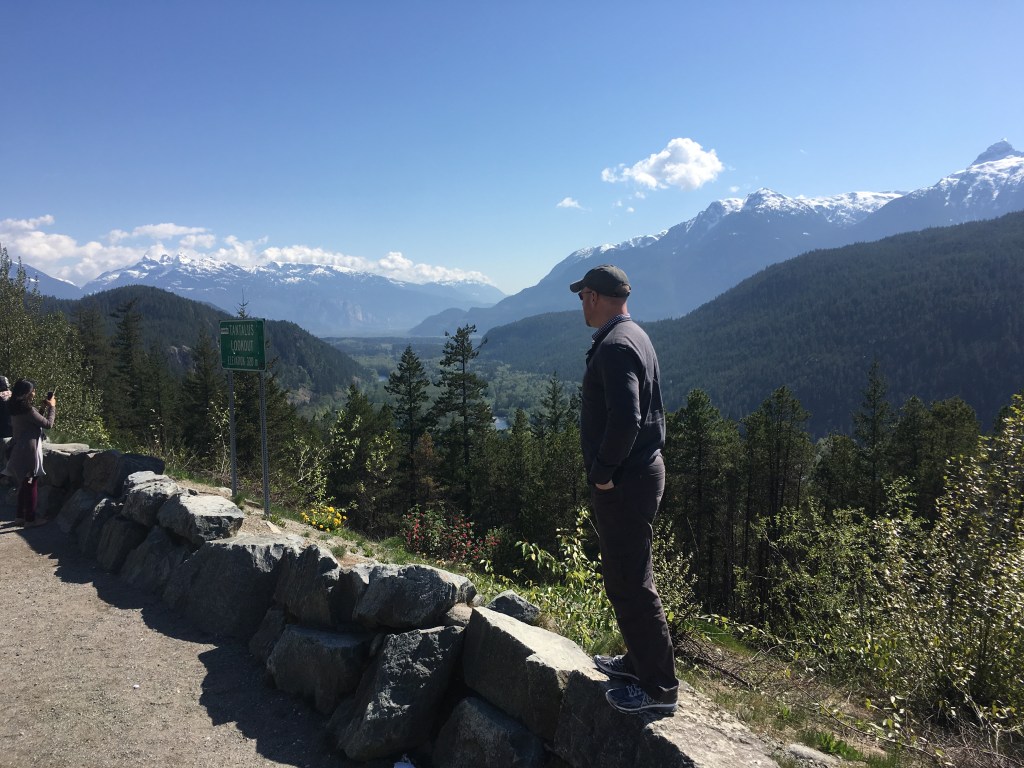
Two men.
Two hardships.
Two responses.
Two destinies.
It is so very true that we become what we behold. The ten spies saw giants, walled cities and ultimately defeat, and in defeat they died.
Caleb and Joshua saw giants, walled cities, and a big, big God. They lived and conquered.
Where did Caleb gain such unshakable confidence and indomitable courage? How was he so certain that God would fight his battles and that together they would stand on top of that mountain, victorious?
I think the answer to this is simple, yet profound. Caleb knew his God. He had seen God do the impossible over and over and over again. He had witnessed the crossing of the Red Sea and the years of being miraculously fed in the desert. He had noted the way no one’s sandals or clothes had worn out in all the years of their wanderings. He had seen water gushing from a rock at Moses’ command. He had witnessed both God’s judgement and mercy at Mt. Horeb.
And Caleb believed. While others doubted, Caleb trusted. It’s not like he was a member of an elite inner circle with an insiders view. He heard what the rest of the people heard. He saw, what they saw. They all walked through the desert dependant on God’s provision. Their circumstances were remarkably similar.
But Caleb believed while the rest grumbled. His trust in God was complete, which made surrender to God’s commands an easy thing. This surrender gave him confidence and joy, and led him to worship because Caleb understood that both the battle and the victory are the Lord’s.

What if we let go of the fear that holds us back and chose to trust God as completely as Caleb did? What if instead of fearing the hard things in our lives we stood with Caleb and looked it full in the face and said as Joshua and Caleb did in Numbers 13:30, “Let us go up at once and occupy it, for we are well able to overcome it,” not because we are stronger than anyone else but because we know the strength of our God.
Western society in general has been conditioned to believe that difficulty equates negative.. We have been taught to believe that difficulty is a bad thing. That suffering is an enemy. And that hard things are to be avoided at all costs. This may not be true of all genuine Christians but it is amazing how easily the onslaught of self-care messages can wiggle their way into our thinking until we subconsciously accept fragments of the idea that “I can’t handle this…” or, “I deserve better.”
We know the Bible says things such as, “all things work together for good for those who love God,” but like C.S. Lewis so aptly pointed out, “We do not necessarily doubt that God will do the best for us; we are wondering how painful the best will turn out to be.”
The truth is, none of us love difficulty. The lengths to which humanity will go to in order to promote comfort is truly astonishing. And while a few of us enjoy physical exertion and outlandish challenges, none of us love experiencing pain, nor are we eagerly anticipating the next hard thing life is about to throw our way.
Because here’s the thing; hard is not the same thing as bad.
Abbie Halberstadt, in her book “M is for Mama” may have coined this phrase, but it is far from a new idea.
I have never done anything harder in my life than teaching my Dustin some of the most simple tasks. I cannot tell you how often in those early years that I literally bit my tongue to keep the hot impatience in my heart from exploding out of my mouth as I tediously showed him how to zip his jacket, or complete some simple task, over and over and over again. It might have been hard, but it wasn’t bad. In the end, he mastered new tasks and I grew in grace and patience. I learned that joy was entirely independent of my circumstances.
Because the truth is, that the measure of joy we experience in life has nothing to do with our circumstances, and everything to do with our surrender to Sovereign God. Of course circumstances may make it more difficult to rejoice, but in the end we find that joy born on the wings of difficulty is a joy that is unhindered by the tempests of life.
We are not victims!
Quoting Abbie Halberstadt, “One of the most miraculous things that walking with Christ does for every believing mama who will receive its gift is to grant us not only a right view of hardship but also the strength to choose the perspective (that hard is not the same thing as bad) day after day instead of defaulting to victim status.”
She continues, and I paraphrase, “We are not victims of our circumstances, marriages or friendships. We are not victims of our finances, lack of sleep, nor even of our ill health. We are not victims of our children’s attitudes, needs, nor yet their alarming propensity to embarrass us in public. We are not victims of the messiness that spills over into our personal space, nor are we victims of our child’s’ hasty words spoken in a flash of anger. These things are hard, but they are not a free ticket to self pity. We are not victims of our circumstances, we are conquerors who rise above them.”
James 1:2. “Count it all joy my brothers, when you meet trials of various kinds, for you know that the testing of your faith produces steadfastness. And let steadfastness have its full effect, that you may be perfect and complete, lacking in nothing.”
It is human nature to blame our feelings of hurt and self pity on something outside of our responsibility. For instance, I may assume that if a certain situation had been handled differently, I wouldn’t feel so upset. If people were friendlier, I wouldn’t feel lonely. If I didn’t have financial stress, I wouldn’t be so uptight. If this or that person hadn’t hurt me, I wouldn’t be struggling with bitterness. If my life weren’t so stressful, I wouldn’t be short tempered with my children or husband.
Like the ten spies we can lament the presence of the Anakim in our lives and the mountains that look insurmountable. We can bumble about, waiting to be rescued and feeling ill-used when rescue is slow in coming, or we can stand with Caleb and declare, “Give me this mountain!”

Victory begins with surrender.
A W Tower says, “The essence of surrender is getting out of God’s way so that He can do in us what He also wants to do through us.”
Paul essentially says the same thing in Galatians 2:20. “I have been crucified with Christ. It is no longer I who live, but Christ who lives in me. And the life I now live in the flesh I live by faith in the Son of God, who loved me and gave himself for me.” My old self has been crucified. This giving of every part of my being to the acknowledged superiority of Someone greater than myself is the quintessence of true surrender.
So here’s the question. If you are constantly stressed and grabbing for control, is fear keeping you from surrender?
Are you afraid of the things God may require of you, or of the boxes He may burst out of that you have neatly sealed and categorized as gospel truth? Are you distrustful of God’s intentions toward you?
Do you fear letting go of what little control you think you still have over your life or that of your family’s life, dubious though it may be?
What are we so afraid of?

Victory is attained through praise.
The Israelite people went out into battle, led not by their mightiest men, but by the makers of music. Worship preceded the battle and with songs of thanksgiving they returned.
2 Chronicles 20 outlines the fascinating story of one such time. The Israelite people were arranged for battle in an oddly specific format, beginning, of all things, with the singers and makers of music. Were they on a suicide mission? As it turns out, God had no intentions of having them fight at all. He instructed them to go to battle, singing while He fought for them.
The battle has always been the Lord’s. He reigns victorious, and has given us all the tools needed to stand with Him in victory.
Victory is preceded by praise, and as we worship, God fights for us. Praising in the hard things as well as the easy is a conscious choice to rely on the fact of God’s presence and promises, and not on the feelings that are momentarily clouding these facts.
We are given a Helper.
2 Peter 1:3-4 says, “His divine power has granted to us all things that pertain to life and godliness, through the knowledge of Him who called us to His own glory and excellence, by which He has granted to us His precious and very great promises, so that through them you may become partakers of the Divine Nature..”
So then, God has already given us all things that pertain to life and godliness. He has given us His Holy Spirit. He has given us His Word (the knowledge of Him). He has given us both the desire and the grace to pursue holiness, and knowledge of Himself.
Many of us have been taught to chin up and do the next right thing, which is an excellent discipline to learn, but are we doing the next right thing with an air of victimhood, or with the courageous heart of Caleb? Are we running on our own steam or are we powered by the Holy Spirit?
The enemy of our souls would have us look around, below, and behind; fearful, controlling, critical, defeated and victimized in our own minds.
God would have us look up; trusting, surrendered, grateful, victorious and filled with joy.

How is it with you my friend?
Do you trust God with the abandoned trust with which Caleb did? Are you confident in God’s goodwill toward you and His ability to fight your battles for you? Or are you, like the 10 spies, fearfully clinging to the controls, wrestling to write your story on your own terms?
Are you victorious in the confidence that God is with you and in you, stepping out with confidence to meet the giants and conquer your mountain, or are you cowering in your tent, beleaguered by the voices of self-pity?
Friends, fellow sisters in Christ, our hope, and our confidence is this, “the Lord your God who goes before you, will himself fight for you…” (Deut. 1:30) He is already standing victoriously on top of our personal mountains, beckoning us upward and onward into the glory of His conquering presence.
Let’s pick up our armour and join Him, shall we? We have nothing to fear and everything to gain.
Bibliography;
–Hard is Not the Same Thing as Bad, by Abbie Halberstadt
-Article condensed from a series of talks given at a Ladies Retreat last year. For more on this topic, feel free to explore the link below.
https://youtube.com/playlist?list=PLzWpEl6NlLrois-lnuSNAXyFlg3e0kxEp&si=i5GLeq9wE1-3OO9C
 Courageous Motherhood, With a Side of Autism
Leave a comment