“Son, be a blessing! That isn’t very nice.”
I glanced at the young father as he smiled benevolently at his completely out-of-control offspring. Did he really think his feral child could translate this as an instruction to not pull his grandmother’s hair while jumping wildly from chair to chair during Bible Study?
I had never seen gentle parenting in action before and by the time the evening was over, I was convinced that the old-fashioned way of raising children was the way for me. I belonged in a world where ‘no’ meant no, and obedience was the expected normal.
Does this mean I prescribe to the extreme method of child-training, where babies cry themselves to sleep because its “good for them” and children robotically obey, devoid of personality and childish sparkle? Absolutely not! Babies are babies and should be cuddled, rocked and nurtured. Children’s personalities should be allowed to shine, each one diverse and interesting, but under control. The truth is, if we take the time to train our toddlers and disciple our little ones, we will have precious few occasions wherein we need to dish out consequences.
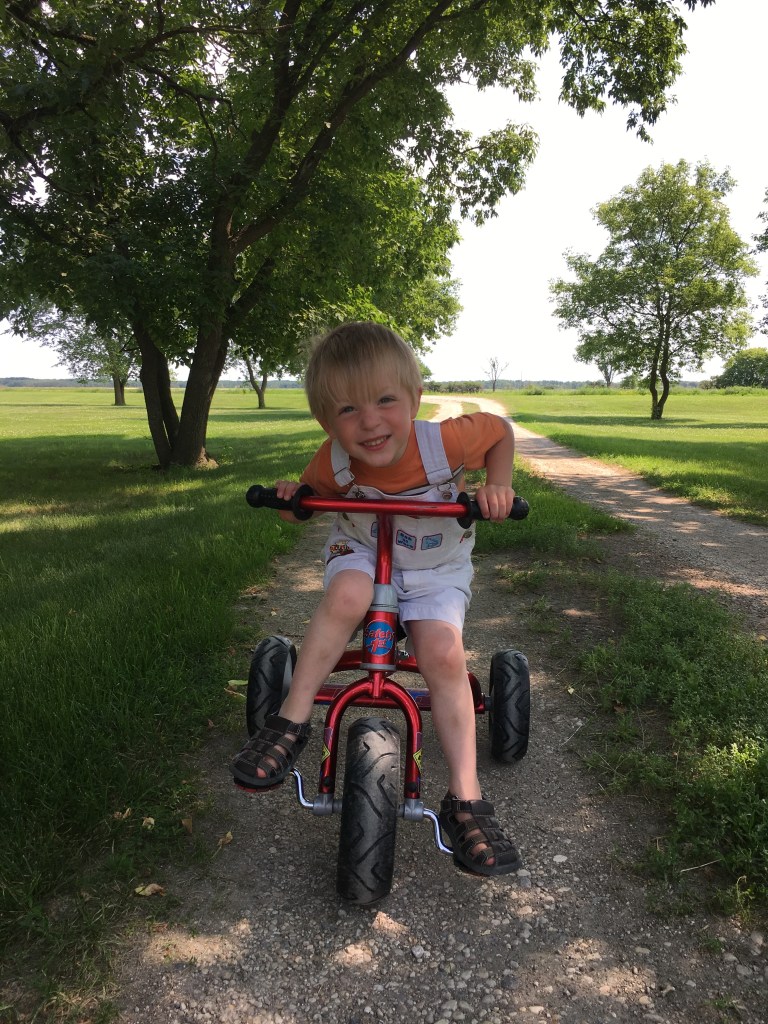
At least that is the plan, and for three out of our four children this worked wonderfully well.
The one out of four? She was pushing boundaries before she could talk. If I told her to sit down in the shopping cart, she screamed because she wanted to stand up. If I said, “Yes, I’ll read you a story, but first we’re going to pick up your toys,” she fell kicking and screaming to the floor. She expected instant gratification at all times and when it didn’t happen, she fell to pieces. Which honestly, was most of the time considering she had an older brother on the autism spectrum who needed patience and extra care,
It took time, love, consequences, and consistency I didn’t know I could stick to, but eventually she learned that “no” wasn’t something you crossed or questioned.
This beautiful daughter of mine is fifteen now and has the purest, gentlest heart of gold. She is one of my favourite people on earth and has me labelled as one of her best friends, an honour I never take lightly.

I find it interesting that an increasing number of people on social media are abandoning gentle parenting methods in favour of “raising my kids in the Slavic tradition,” which basically translates as, “I use the word ‘no’ and I give consequences for disobedience.” Interestingly enough, gentle parenting only seems to work for those who did not begin parenting by wholeheartedly prescribing to its methods. They first taught their children the meaning of the word ‘no’ and later believed their methods were too harsh—and perhaps they were. The momentum of making that mental shift swung them widely into the opposite camp where instead of harsh parenting, they turned to gentle parenting. The other version of “success” is characterized by parents who constantly lower their expectations to fit their children’s behaviour until it is clear that the child is leading the parents, instead of the child being guided.
I believe in saying “yes” to my children whenever possible. Yes, to an impromptu swim in Lake Huron even if it means a later start to a long drive. Yes, to picnics and “let’s run to the end of the lane to catch the sunset,” suggestions by my beauty-loving daughter. Yes, to tea and hot chocolate. Yes, to taking them skating when I would rather stay at home and out of the cold. Parents have so many legitimate reasons to say no, but I believe the “no’s” we give ought to be for their own good and not to accommodate our personal comfort or convenience. Children are bloodhounds for detecting selfishness or hypocrisy. Don’t give them reason to question your integrity.

Yet as much as I love saying yes to my children, I also believe that the only reason I can say yes as often as I do, is because they have first learned the value and implacability of the word, no. I am not talking about a grudging, eye-roll kind of obedience, but a cheerful (and here I may expose the remnants of my southern childhood) “Yes, ma’am” or “Yes, sir.”
If you know our family, you will know we don’t do this perfectly, yet it is the standard for our home. I am convinced that the most loving thing I can do for my children is to teach them to honour and value the word “no.”
The book of 1 Kings opens with one of the saddest verses in Scripture that I know. After a long and fruitful life, David was on his deathbed. He had not yet appointed one of his sons to be king. In this deficit of strong leadership, Adonijah took it upon himself to declare, “I will be king,” and he immediately set about putting his plan into action. Scripture gives the following explanation for Adonijah’s actions, “His father had never at any time displeased him by asking, ’Why have you done thus and so?’” (1 Kings 1:6).
David himself was a godly man. The Bible calls him “a man after God’s own heart,” not because of his perfection but because of his humility in repentance and continual seeking after God. If this is so, then why do so many of David’s sons fail to follow in his footsteps?
Could it be that the fault lay in David’s inability to say ‘no,’ and then follow through? Men are a huge influence in their sons’ lives, yet the influence for good is only as powerful as a father’s ability to say “no” and stick to his “no.” We may observe godliness and great child-training methods all we please; we may follow parents on social media who seem to be doing a great job raising responsible, respectful teens; we may listen to podcasts and messages, gleaning wisdom from those older than us, but unless we learn the discipline of personal consistency we will be unable to teach our children the value of the word “no.” Spending time with godly people may inspire us, but unless we act upon that inspiration, any influence they could have had is brought to nothing.
Adonijah wasn’t the first of David’s sons to be governed by his own desires and ideas. Amnon believed himself so passionately in love with Tamar that he could not rest until his lust had been fulfilled. He had no regard for the devastation his actions brought upon Tamar. He only knew he wanted to die if he couldn’t have her (2 Samuel 13).
Absalom hated Amnon for the things he had done to his sister (honestly, Absalom was more righteous in his anger than the other two were in their self-conceit and ungoverned passion), so he killed him. He wanted Joab’s attention, so he set Joab’s field on fire. He thought he could be a better king than his father David, so he set about winning the hearts of the people until he had enough support to start an uprising (2 Samuel 13- 14).
These men had once been boys. Boys who probably looked up to their father and longed for his attention. Boys who were impressionable and could have been taught the value of the word “no” if David could only have been bothered to invest in and guide them.
I like to think that David, the teachable man of God, saw his mistake through the ungovernable lives of his older sons, for he left his younger son Solomon with an entire book of proverbs and instructions.
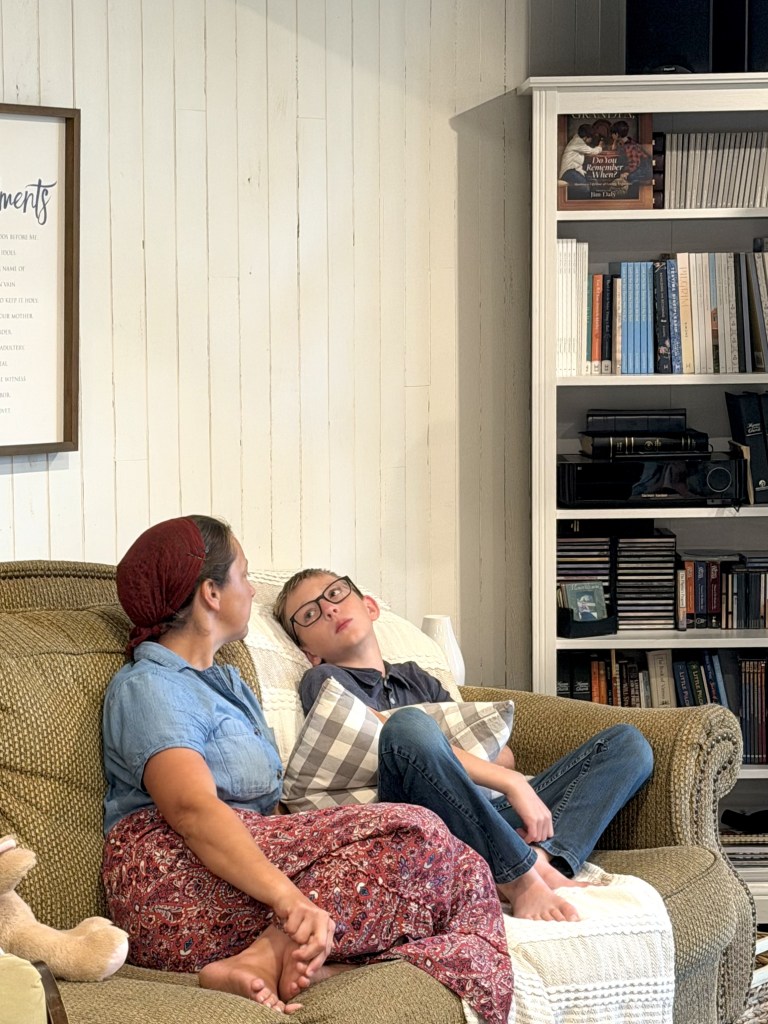
Children need clear guidelines, and this is never more true than when raising boys. There comes a time in every boy’s life (usually between the ages of twelve and fourteen) when they begin pushing back, thinking for themselves, and wanting to take leadership. This is a natural development in the process of boys becoming men and a necessary step in learning to be leaders. But boys will not grow up to be good leaders until they have first learned the value of the word “no.”
It is the deepest unkindness to allow our children to grow up assuming they are an exception to the rules. That Dad (or Mom) can be begged or reasoned into changing his mind, like David did when Absalom pushed hard enough, going against his better judgement and compromising to please his son (2 Samuel 13:27).
Children need the security of knowing that both Dad and Mom’s “no” is set in stone. It is not up for negotiation, whining will only solidify the “no” into the law of the Medes and Persians, and pouting is rewarded by consequences they don’t wish to have repeated.
Every time we say “no” to our children, only to change our minds because we don’t feel like dealing with the ensuing attitudes, we are inadvertently teaching them the serpent’s tactics in Genesis 3 when he asked, “Did God actually say…?” Our children learn to think there is a way around this. Maybe I can semi-obey but still do things my way. Maybe Dad didn’t really mean what he said. Maybe if I wait long enough and try again, he will change his answer.
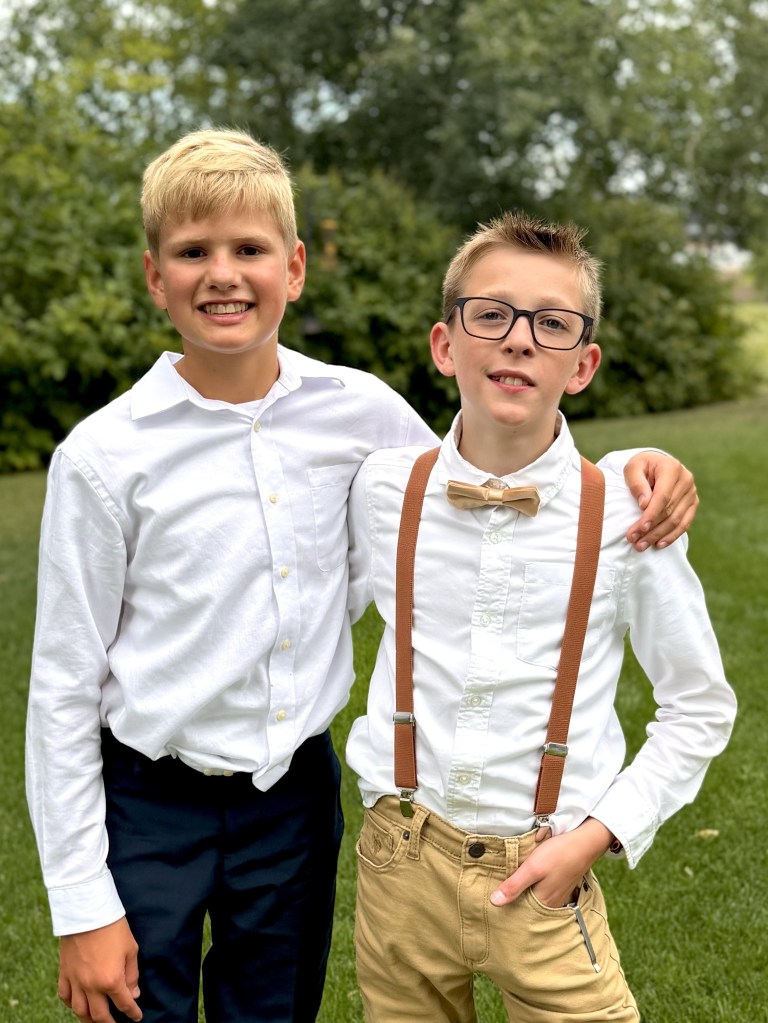
As a parent of young teens I understand better than ever the parental trap of second-guessing decisions based on the pushback received from an intelligent teenage mind.
But I am also the parent, and I see what his logical brain does not always appreciate—that if he doesn’t learn to follow instructions that don’t make sense to him, he will have a difficult time saying “yes” to God when he doesn’t understand the objective. In many occasions, God asks us to step out in obedience without giving us a clear understanding of the “why.” To raise children who feel entitled to understanding every why before they obey is to set them up for questioning God when God’s ways differ from their own. Just because their own logic tells them one thing, doesn’t mean they have the right to question God.
(Side note: Asking “why?” is a good thing. Valuable knowledge is gained and understanding is deepened by inquisitive minds asking, “but why…?” However, it is vastly different asking why after they have already obeyed, versus asking the same question before obeying your directive.)
I don’t think we can over emphasize the value of children learning to promptly and thoroughly obey when we say “no” or give directions.
It teaches self-control. It teaches accountability and responsibility. It teaches respect for authority. It teaches them to bow their opinions to others, even if their way seems better. It teaches them to follow instructions without question.
Children who are accustomed to honouring their parents’ “no” are self- controlled. They have fun, they run and yell and play and plop into kitchen chairs telling us about their adventures with shining eyes, yet they are not wildly reckless and irresponsible. They may accidentally break something, but they will own their mishap and apologize. They may not always be models of perfect behaviour, but they carry with them an aura of respect and governed confidence. They understand that there are boundaries in life that one simply does not cross.

It does not automatically follow that our children will walk in our footsteps, no matter how consistent and diligent we may be. We would like to believe the method infallible, and yet each person is given a choice to walk with God or reject Him, our children included. Still, I have observed that it is much harder for someone to turn their back on God and defy their parents’ teaching if they have been taught the value of ‘no’ from childhood. They understand the concept of boundaries. They know the relief of living with a free conscience. Training our children God’s way is not a foolproof method, but it is our ‘yes’ to God while giving our children the best chance possible.
And so, dear mamas, don’t be intimidated when your toddler or your teenage son begins pushing back. Stick to your “no” without apology, knowing that real love considers what is good for the development of your child’s character, not necessarily what feels good to them in the moment.
Just say “no.”
Do it for love.
Do it for God.
Do it without guilt or apology, knowing you are giving your child the best chance at success in both the spiritual and earthly realms.


Leave a Reply